
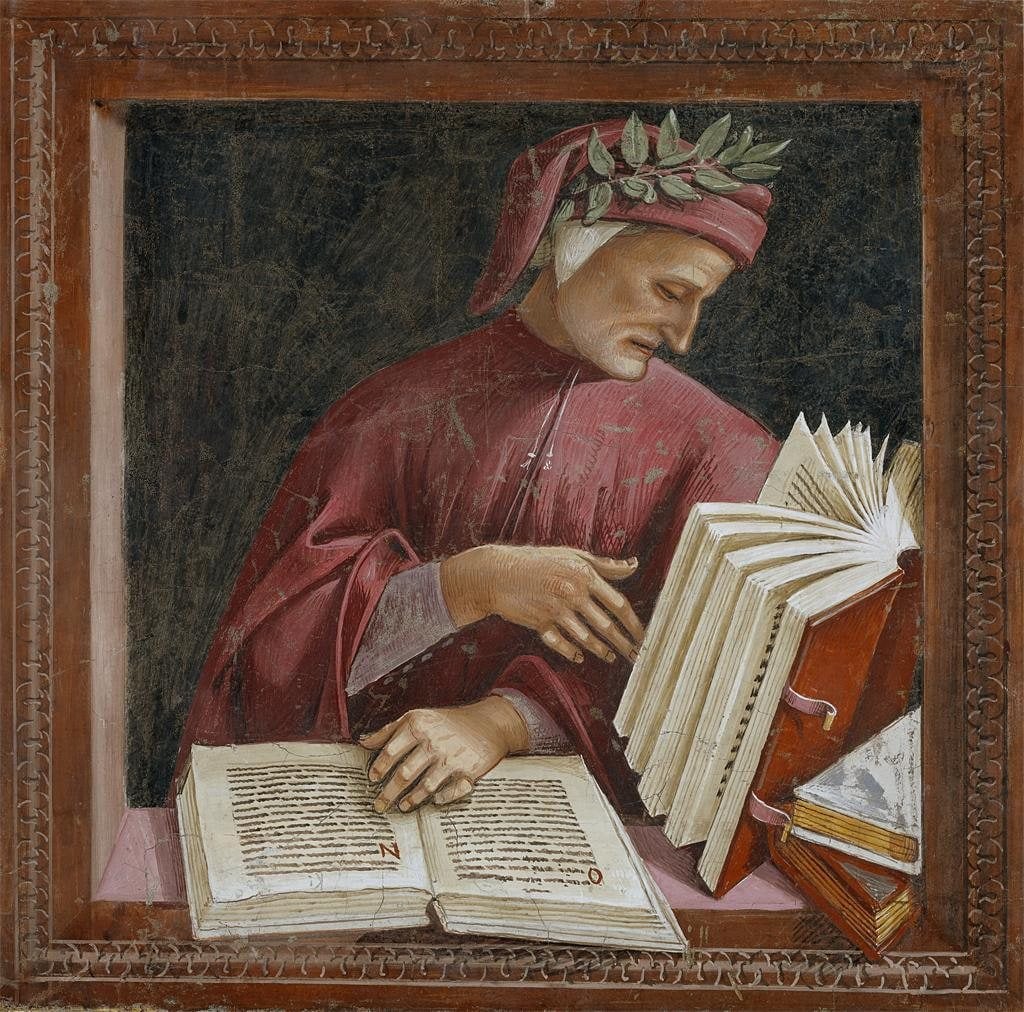
On September 14, one of the most far-reaching events in global history is the death of Dante Alighieri in 1321. Dante was a poet from Florence whose writing helped shape the Italian language and the literary culture of Europe. His best-known work, The Divine Comedy, gave readers a vivid journey through Hell, Purgatory, and Paradise, but its importance went far beyond religion or poetry. By writing in the everyday language of his region instead of formal Latin, Dante showed that major literature could speak directly to ordinary people. That mattered in his own time because it widened who could take part in cultural life. It still matters today because many modern national languages and literary traditions grew stronger when writers followed that same path.
Get The Latest News!
Don't miss our top stories and need-to-know news everyday in your inbox.
The date also marks an important turning point in world exploration. In 1812, Napoleon Bonaparte entered Moscow during his invasion of Russia. At first glance, taking the city looked like a major success for the French emperor. In reality, it became a costly setback. Much of Moscow was soon consumed by fire, supplies were scarce, and the Russian army had largely withdrawn instead of surrendering. Napoleon had advanced deep into hostile territory without securing a lasting victory. The retreat that followed weakened his army and shifted the balance of power in Europe. Historians often point to this campaign as the beginning of the end for Napoleon’s dominance.
Only a few decades later, conflict in North America produced another event remembered on this date. In 1847, during the Mexican-American War, U.S. forces under General Winfield Scott entered Mexico City after a campaign that included the Battle of Chapultepec. The fall of the capital effectively ended major military resistance and led toward the Treaty of Guadalupe Hidalgo in 1848. That treaty redrew borders across a vast region, transferring large territories to the United States. The war had long-term consequences for both countries, affecting politics, migration, and debates over the expansion of slavery in the United States.
Science and engineering also have an important place on September 14. In 1901, Theodore Roosevelt became president of the United States after the death of William McKinley, and while that transition was political, Roosevelt’s era would soon become closely linked with industrial growth and conservation. Yet another event on the same date had a more direct scientific legacy. In 1959, the Soviet spacecraft Luna 2 became the first human-made object to reach the Moon. It crashed onto the lunar surface after a successful flight, proving that a spacecraft could travel from Earth to another celestial body. This was a major moment in the Space Race, but it also carried broader meaning. It opened a practical path toward later robotic missions, crewed lunar landings, and modern planetary exploration.
A different kind of global headline came in 1994, when Major League Baseball canceled the World Series because of a players’ strike. Although this was a sports story, it reflected larger issues about labor, money, and public trust in professional entertainment. Fans who had followed the season saw one of the sport’s oldest traditions interrupted. The cancellation remains significant because it showed how disputes between athletes and team owners could reshape major cultural institutions.
In 2003, Estonia voted in a referendum to join the European Union. For a country that had regained independence from Soviet rule only a little more than a decade earlier, the decision represented a major strategic and economic choice. EU membership, which followed in 2004, linked Estonia more closely with European institutions and markets. The vote reflected a broader pattern in post-Cold War Europe, where several countries sought stability and cooperation through regional integration.
September 14 is also remembered for a major social and humanitarian story. In 2015, images and reports tied to the European migrant and refugee crisis continued to dominate world attention as governments debated border policy, asylum systems, and relief efforts. While no single event on that day alone defines the crisis, mid-September 2015 marked one of the clearest moments when displacement from war and instability, especially in Syria and elsewhere, became a central issue in international discussion. It highlighted the human scale of forced migration and the challenge of coordinating a response across many countries.
Several notable people were born on this date and left lasting marks in different fields. In 1769, Alexander von Humboldt was born in Berlin. He became one of history’s great explorers and naturalists, traveling widely in Latin America and studying geography, climate, plants, and animal life as connected systems. His work influenced environmental thought, earth science, and later scientists including Charles Darwin.
A very different kind of influence came with the birth of Ivan Pavlov in 1849. The Russian physiologist is best remembered for his research on conditioned reflexes, often demonstrated through experiments involving dogs. His findings helped shape psychology, neuroscience, and the scientific study of learning. Even people unfamiliar with his full body of work still know the phrase “Pavlovian response,” which shows how deeply his ideas entered everyday language.
The arts are represented by Mario Benedetti, born in 1920 in Uruguay. Benedetti became one of Latin America’s most widely read writers, known for poetry, novels, and essays that often explored love, exile, memory, and daily life. His clear style and emotional directness gave his work broad appeal across generations.
This date also marks the passing of several important figures. Dante’s death in 1321 stands out not only because of his literary achievement, but because his work helped bridge the medieval world and the emerging cultural life of early modern Europe. His influence has lasted for centuries in literature, language, art, and political thought.
In 1982, Princess Grace of Monaco, formerly the American actor Grace Kelly, died after a car accident. Before becoming princess, she had built a major film career in Hollywood and won an Academy Award. Her later public role in Monaco made her an international cultural figure whose life connected cinema, celebrity, and royalty in a way that captured worldwide attention.
Looking across September 14, a pattern emerges. This date brings together poetry and print, war and diplomacy, science and music, discovery and migration.
Send your news tips to news@edglentoday.com or on twitter @EdGlenTodayNews


