
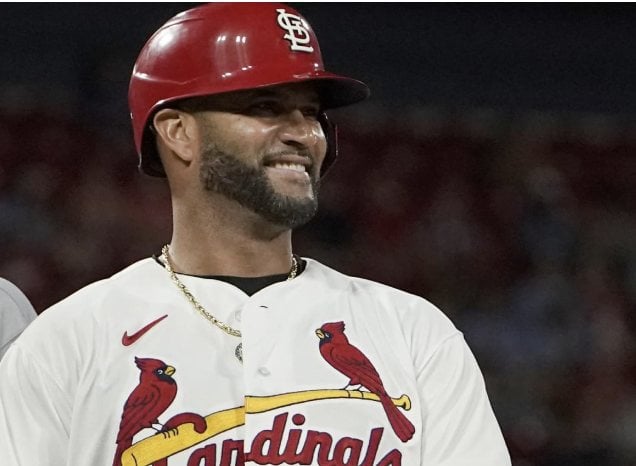
 St. Louis baseball fans had their own milestone on Aug. 26, 2010. Albert Pujols hit the 400th home run of his career, a solo shot off Washington Nationals right-hander Jordan Zimmermann. The Cardinals slugger reached the mark during his 10th major league season, continuing a run of production that had made him the face of the franchise. Pujols finished that 2010 season with 42 home runs and later helped the Cardinals win the 2011 World Series. His 400th homer was another measure of the sustained excellence that eventually carried him past 700 career home runs and into the conversation among baseball’s greatest right-handed hitters.
One of the most consequential sports milestones associated with Aug. 26 came in 1939, when NBC televised a Major League Baseball game from Brooklyn’s Ebbets Field. The Cincinnati Reds and Brooklyn Dodgers were the teams, but the lasting story was the medium. Baseball had been heard on radio for years; television now offered viewers a new way to experience a professional game. The experimental broadcast was limited by the technology of its day, yet it helped establish the relationship between live sports and television that would transform leagues, athletes, fans and the business of sports.
Get The Latest News!
Don't miss our top stories and need-to-know news everyday in your inbox.
That broadcast sits near the middle of an Aug. 26 timeline that runs from the dead-ball era to modern athlete activism. The day has produced a no-hitter, a championship with a St. Louis connection, a track world record that still stands, and a Cardinals milestone that put Albert Pujols in rare company.
On Aug. 26, 1916, Philadelphia Athletics right-hander Bullet Joe Bush threw a no-hitter against the Cleveland Indians at Shibe Park, winning 5-0. Bush faced a Cleveland lineup that included future Hall of Famers Tris Speaker and Stan Coveleski. He struck out seven, including Speaker once, and turned away every Indians hitter. In an era when pitchers were expected to finish what they started and runs were scarce, Bush’s performance stood out even among the strong efforts of his 15-year major league career. It remains part of Athletics franchise history more than a century later.
Twenty-three years afterward, professional sports television took a foundational step. On Aug. 26, 1939, NBC carried the Reds-Dodgers game from Ebbets Field, the first televised Major League Baseball game. Red Barber called the action using two cameras, a tiny production setup by modern standards. The audience was also tiny compared with today’s national broadcasts, because television ownership was still rare. But the significance is clear in retrospect. Games would eventually become central programming for local stations, networks and cable channels, and televised sports would give clubs far broader audiences than a ballpark could hold.
Baseball history returned to the date on Aug. 26, 1962, when Minnesota Twins left-hander Jack Kralick pitched the first no-hitter in the club’s Minnesota era. The Twins beat the Kansas City Athletics 1-0 at Metropolitan Stadium. Kralick retired the first 25 Athletics before George Alusik drew a two-out walk in the ninth inning, ending the perfect-game bid but not the no-hit bid. He then retired the final batter to complete the 97-pitch performance. The former Washington Senators had moved to Minnesota only the previous season, so the game gave the young Twins identity one of its earliest unforgettable moments.
On Aug. 26, 1972, the St. Louis Stars came within one victory of a North American Soccer League championship. Instead, the New York Cosmos won the final 2-1 at Hofstra Stadium in Hempstead, New York. Randy Horton and Josef Jelínek scored for the Cosmos, with Jelínek’s goal providing the decisive margin before 6,102 fans. The result delivered the Cosmos’ first league title in just their second season. It also marked a significant chapter for the Stars, one of the early professional soccer clubs that made St. Louis a meaningful part of the NASL landscape. The Cosmos later became the league’s best-known team, especially after signing Pelé, but the 1972 final was the club’s first championship breakthrough.

Michael Johnson Recorded A 43.18 400 Meters Time On This Date In History
Track and field supplied another defining Aug. 26 performance in 1999. At the World Championships in Seville, Spain, Michael Johnson won the men’s 400 meters in 43.18 seconds, breaking Butch Reynolds’ 11-year-old world record of 43.29. Johnson finished more than a second ahead of Brazil’s Sanderlei Parrela, who ran 44.29, while Mexico’s Alejandro Cárdenas took bronze in 44.31. The race gave Johnson his fourth straight world title at 400 meters and his eighth World Championships gold medal overall. More than a quarter-century later, 43.18 remains the men’s world record, underscoring how exceptional his one-lap run was.
Aug. 26 also became a landmark date in the history of athlete protest. In 2016, San Francisco 49ers quarterback Colin Kaepernick sat during the national anthem before a preseason game against the Green Bay Packers. Afterward, he explained that he was protesting racial injustice and the treatment of Black people and other people of color in the United States. The act, which soon evolved into kneeling after discussions with former NFL player Nate Boyer, spread across sports and sparked sharp national debate. Whatever the public response, Kaepernick’s decision demonstrated how an athlete’s action before a game could become a lasting part of the nation’s sports history.
From Bush’s no-hitter to the first televised big league game, from St. Louis soccer and baseball to Johnson’s enduring record and Kaepernick’s protest, Aug. 26 shows the many ways sports history is made. Some moments are decided by a final score or a stopwatch. Others change how games reach fans or how athletes use their public platform. Each has left a mark well beyond the day it happened.
Send your news tips to news@edglentoday.com or on twitter @EdGlenTodayNews


